Eastern subterranean termites cause substantial structural destruction across Richmond County, where high ambient humidity and damp red clay create continuous subterranean nesting corridors. Properties in Summerville,…
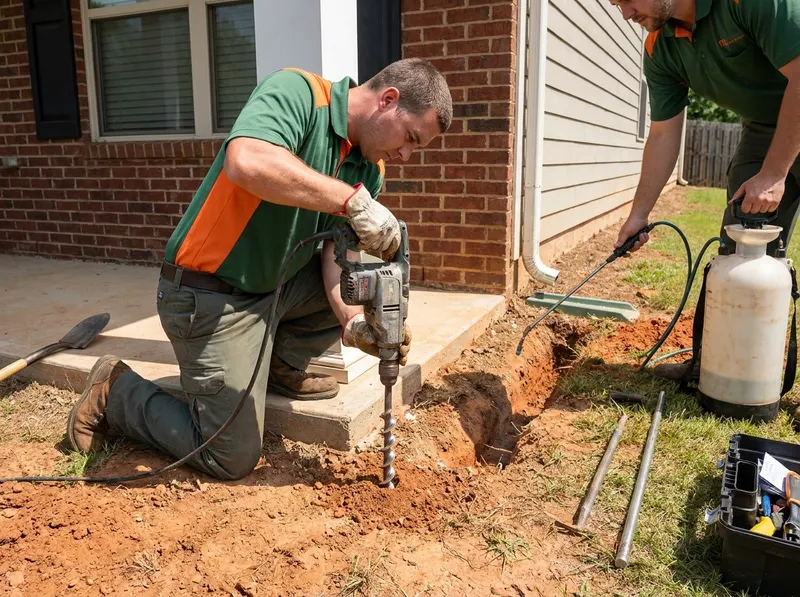
Eastern subterranean termites cause substantial structural destruction across Richmond County, where high ambient humidity and damp red clay create continuous subterranean nesting corridors. Properties in Summerville, Forest Hills, and Montclair frequently feature older crawlspace construction and historic heart-pine floor joists sitting close to moist soil lines. A liquid non-repellent barrier fits structures with active perimeter access and immediate interior galleries: liquid termiticide bonds to the soil 6 inches deep around foundation piers, transferring undetected among workers to eliminate the subterranean nest.
In contrast, low-profile bait stations fit properties bordering damp woodland reserves near the Augusta Canal National Heritage Area or Phinizy Swamp Nature Park, where high groundwater tables prevent liquid chemical absorption into saturated soil. Bait systems intercept foraging workers before they reach wooden sill plates, though eradication cycles take 60 to 90 days longer than liquid trenching. Historic masonry homes in Old Town and Harrisburg often present zero-lot-line configurations or brick footings over dirt basements.
Drilling interior concrete pads at 12-inch intervals and rodding behind stone veneers establishes a contiguous chemical shield without disturbing historic brickwork. For residences in National Hills and West Augusta built on monolithic concrete slabs, plumbing penetrations through the slab represent the primary breach point. Treating subterranean termites requires addressing soil-to-wood contact points: untreated wooden crawlspace lattice, damp mulch within 18 inches of masonry, and downspout runoff that pools against brick piers.
Technicians apply non-repellent active ingredients like fipronil directly below the frost and root line, eliminating risk to children and household pets once liquid settles and dries. Direct service scheduling avoids third-party broker delays, sending qualified specialists to verify active mud leads rather than relying on generalized phone estimates.
Every job gets a firm, written price after a free on-site visit.
Tell us about your subterranean termite treatment job in Augusta and we'll send a clear, written quote, usually the same day.
 Trivano Pest Assistance