Augusta properties frequently experience dense subterranean ant pressure due to subtropical humidity and river basin moisture from the Savannah Riverwalk through Phinizy Swamp Nature Park. In historical neighborhoods…
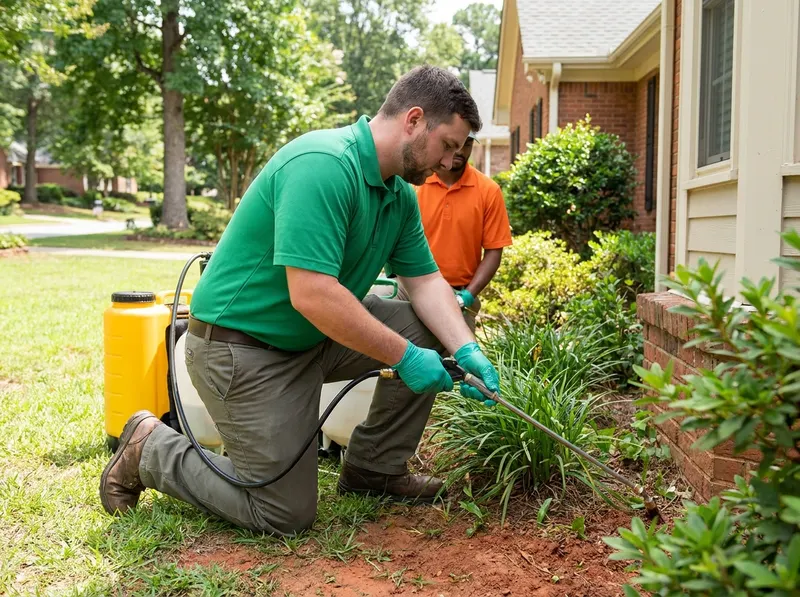
Augusta properties frequently experience dense subterranean ant pressure due to subtropical humidity and river basin moisture from the Savannah Riverwalk through Phinizy Swamp Nature Park. In historical neighborhoods like Summerville and Harrisburg, mature tree root systems and aging heart-pine framing provide primary harboring avenues for satellite carpenter ant colonies. Further west across Forest Hills, National Hills, and Montclair, compacted Georgia red clay complicates surface treatments, causing generic DIY pyrethroids to bead on the topsoil rather than penetrate nesting galleries. Surface repellents trigger colony fissioning, known scientifically as budding, where a single queen Argentine or odorous house ant colony splits into 3 to 6 separate active colonies dispersed across a lawn or crawlspace.
Subterranean soil treatment resolves persistent re-infestation by utilizing non-repellent transfer chemistry like fipronil or chlorfenapyr along the foundation wall. Technicians establish a continuous liquid perimeter by trenching soil 4 inches deep and 6 inches wide along foundation stems, applying finished solution at a rate of 4 gallons per 10 linear feet. Foraging worker ants walk through the treated subterranean band without detecting the barrier, mechanically transporting the active toxicant back to the subterranean brood chamber through social grooming and trophallaxis (food sharing). This non-detection dynamic guarantees lethal transfer to the egg-laying reproductive queens rather than merely stopping visual foraging trails along baseboards.
Choosing targeted colony eradication over quarterly surface-spray subscriptions preserves both soil health and household budgets. Standard calendar chemical sprays only mask surface trails in Barton Village or West Augusta slab homes, forcing homeowners into unnecessary 12-month service bindings. Deep soil injections and targeted biological bait systems solve the primary nesting source on visit one, remaining stable in Richmond County clay for 12 to 18 months under normal precipitation. When properties border swamp drainage basins or natural irrigation paths near the Augusta Canal National Heritage Area, technicians adjust saturation chemistry to maintain stable binding with clay soil particles without chemical washaway.
Every job gets a firm, written price after a free on-site visit.
Tell us about your ant colony elimination & soil treatment job in Augusta and we'll send a clear, written quote, usually the same day.
 Trivano Pest Assistance