Securing a professional pest control service in Augusta stops structural wood damage and indoor biological contamination before infestations migrate through wall voids. Homeowners facing sudden insect swarms or rodent entry receive direct diagnostic triage from local technicians targeting regional pests near the Savannah River basin.
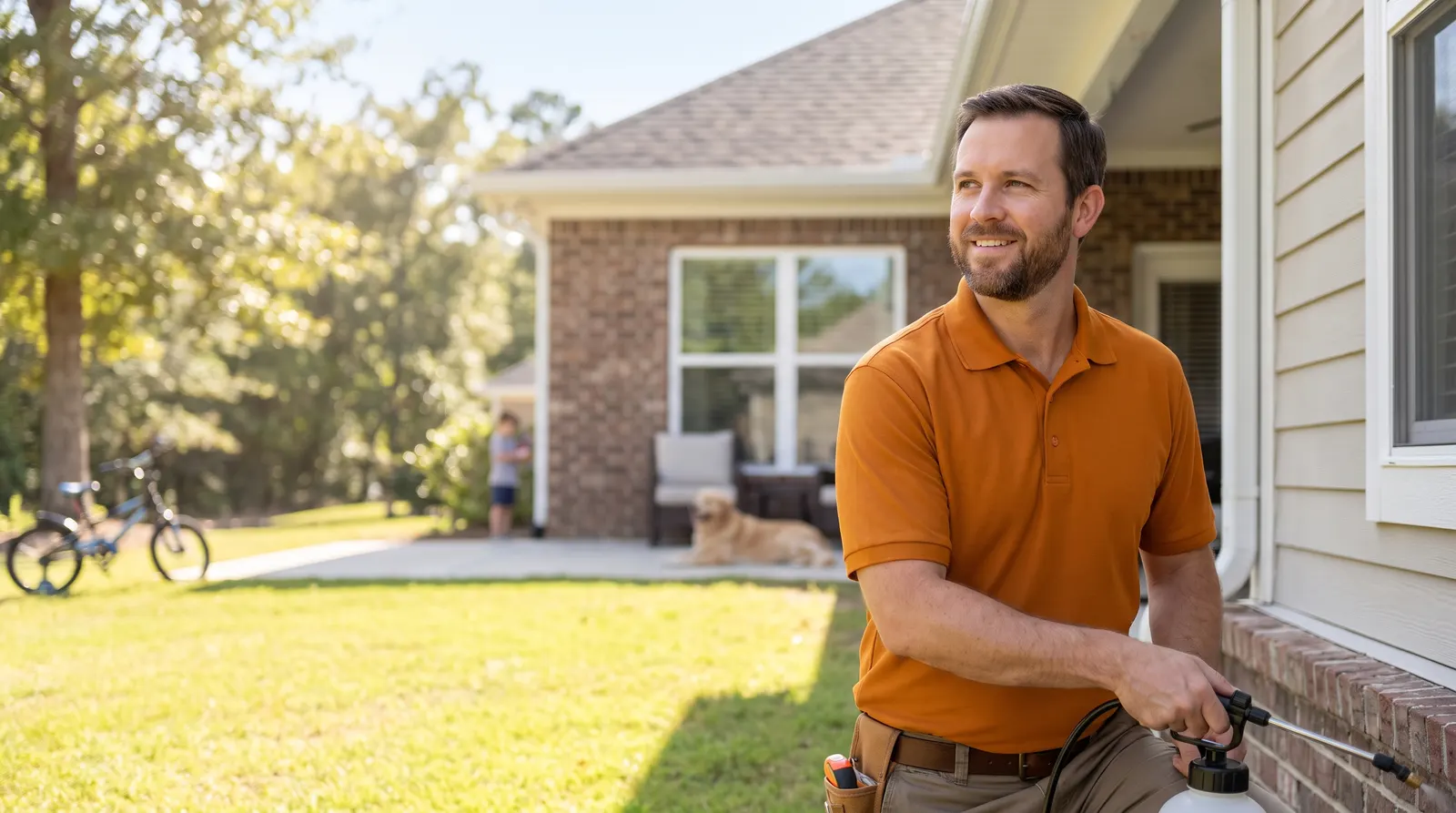
A pest control service company in Augusta is an on-site structural remediation provider that eliminates wood-destroying organisms, biological vectors, and parasitic insects from residential and commercial structures throughout Richmond County.
Every service reflects the same meticulous attention to detail, whether it's a single job or a larger pest control service project across Augusta.
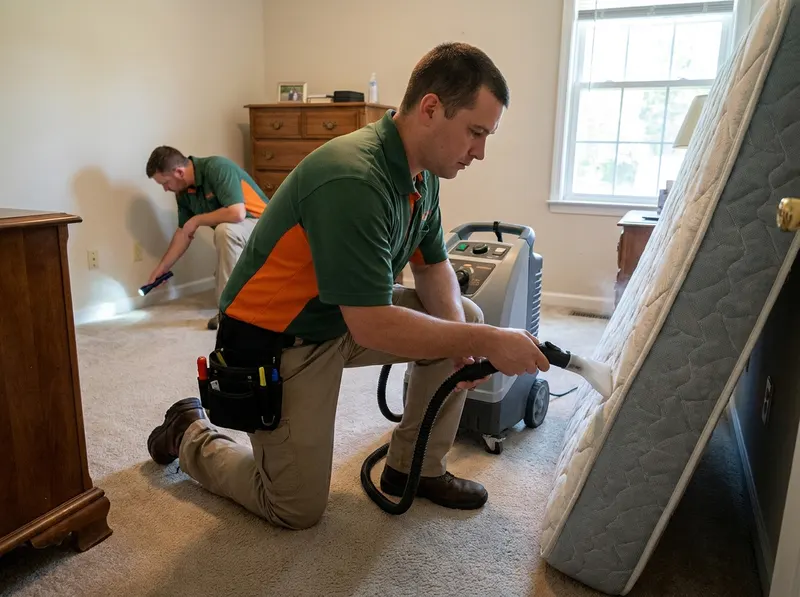
Comprehensive eradication of Cimex lectularius utilizing precision electric thermal convection systems paired with residual micro-crystalline desiccant dusts. Technicians elevate ambient room temperatures to lethal thermal kill zones between 122 and 135 degrees Fahrenheit, maintaining this thermal plateau across a sustained 4 to 8 hour dwell period to penetrate mattress seams, upholstered furniture frames, hollow wall voids, floor trim, and behind electrical outlet faceplates. This thermal mass eliminates all life stages of bed bugs, including desiccation-resistant eggs, nymphal instars, and breeding adults, in a single operational intervention. Following thermal treatment, non-toxic amorphous silica dust is precision-injected along internal perimeter wall voids to establish an inorganic barrier that dehydrates any newly introduced pests for up to ten years without off-gassing synthetic chemicals or exposing residents to airborne residual odors.
Get a quote →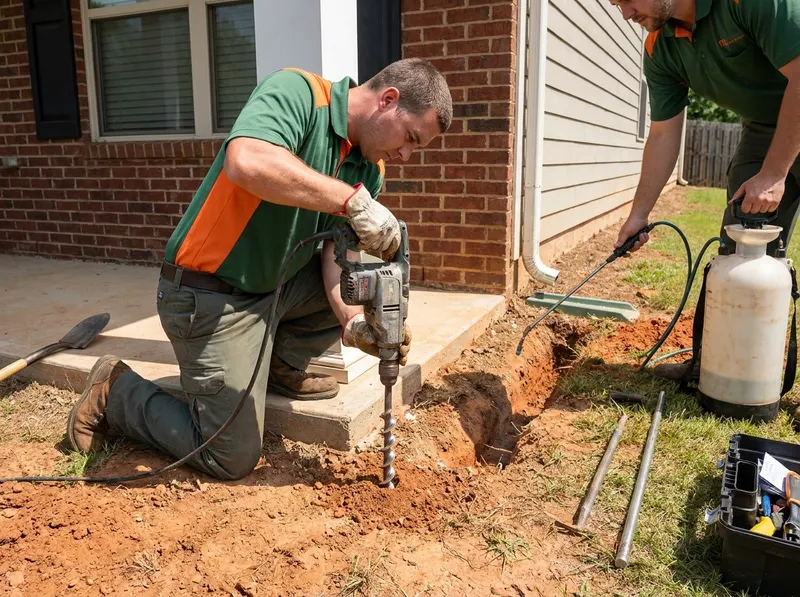
Full structural defense targeting Reticulitermes flavipes and invasive Coptotermes formosanus using undetectable liquid termiticides such as non-repellent fipronil suspensions. Technicians execute continuous continuous perimeter trenching measuring 6 inches wide by 6 inches deep adjacent to exterior masonry foundation footings, pressure-injecting four finished gallons of termiticide solution per ten linear feet into backfilled soil. Where exterior slabs, carports, and brick-mortared porches abut the primary structure, technicians diamond-core drill vertical 0.5-inch access holes spaced 12 inches on center through concrete pads to establish an uninterrupted subsurface chemical envelope. When foraging worker termites pass through this non-repellent zone, they transfer the lethal active compound to the subterranean queen and central nest population through social grooming and trophallaxis, achieving complete colony eradication within 60 to 90 days.
Get a quote →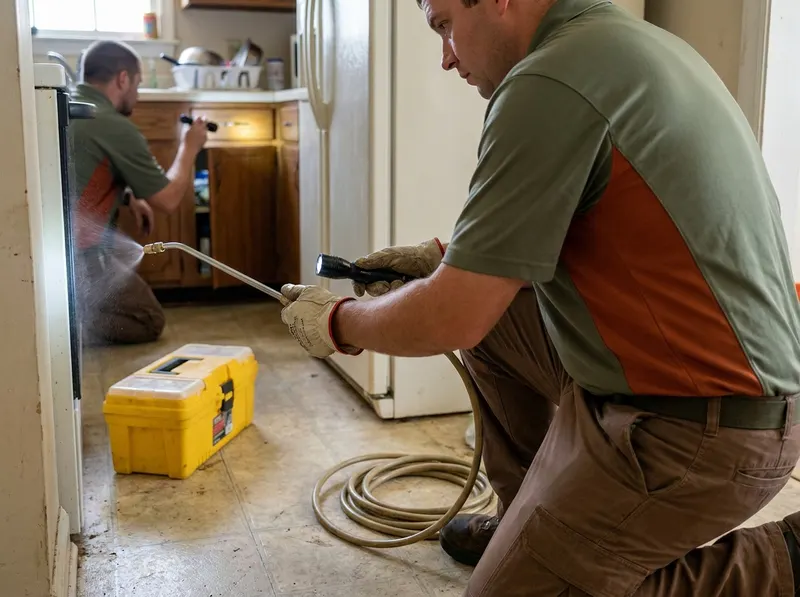
Systematic remediation of Blattella germanica within high-humidity residential kitchens, commercial pantries, and moisture-rich plumbing chaseways. The protocol utilizes a biological cleanout method beginning with targeted high-efficiency particulate air (HEPA) vacuum extraction to physically remove aggregating nymphs, adults, egg cases, and allergenic fecal matter from motor compartments, sink cabinetry, and stove voids. Technicians strategically apply insect growth regulators (IGRs) like pyriproxyfen alongside highly palatable lipid- and carbohydrate-based microencapsulated bait matrices placed in discreet crack-and-crevice locations. The IGR breaks the structural reproductive sequence by chemically arresting nymphal molting and inducing sterile adult development, while the slow-acting neurotoxic bait compounds exploit natural coprophagy and necrophagy, cycling lethal doses throughout the harborage population without airborne broadcast spraying.
Get a quote →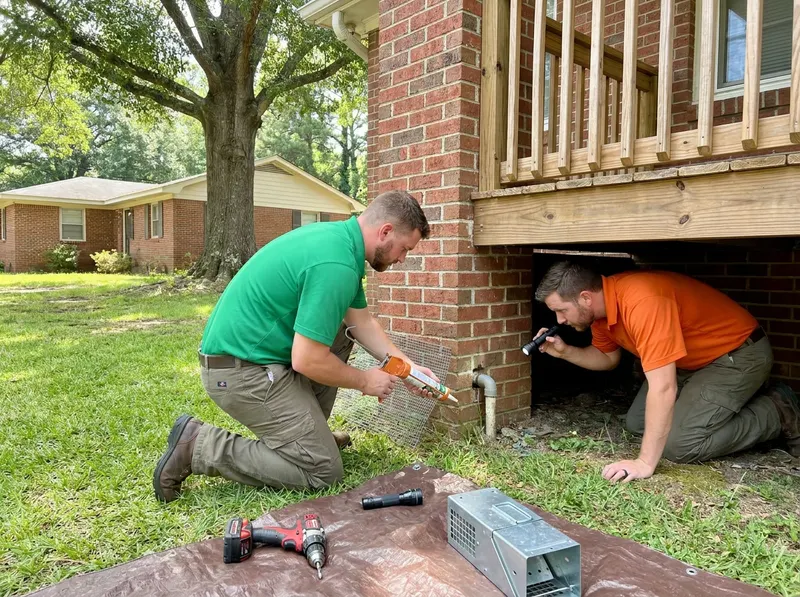
Targeted mechanical trapping, sanitary biological remediation, and permanent architectural exclusion engineered to eradicate Rattus rattus (roof rats), Rattus norvegicus (Norway rats), and Mus musculus (house mice). Technicians map every entry breach along structural exterior envelopes, systematically sealing architectural voids, frieze board separations, crawlspace door gaps, and foundation masonry cracks larger than 0.25 inches. Sealing protocols incorporate 19-gauge galvanized welded hardware cloth, poly-blend expanding foam impregnated with stainless steel mesh wool, and UV-stabilized elastomeric masonry adhesives. Simultaneously, technicians establish secure, tamper-resistant interior trapping arrays within crawlspaces, attic joist runs, and drop ceilings to rapidly reduce the interior population within 48 to 72 hours, avoiding secondary dead-animal carcass odors inside drywall voids.
Get a quote →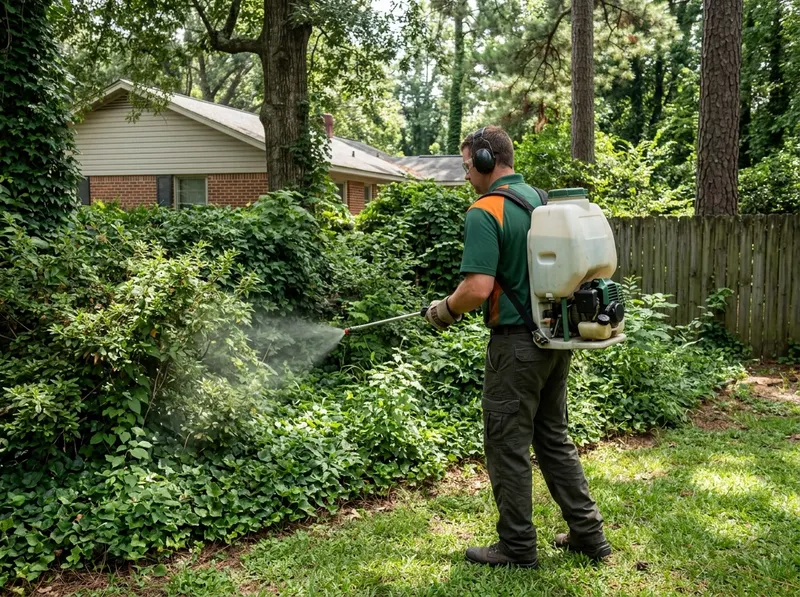
Exterior boundary suppression targeting Aedes albopictus and Culex quinquefasciatus vectors across residential perimeters, shaded shrubbery, and damp ground covers. Technicians use gas-powered air-blast atomizing mist blowers to apply microencapsulated synthetic pyrethroids combined with polymeric surfactants directly to the shaded undersides of broadleaf shrubs, ivy patches, tree canopies up to 10 feet, and perimeter structural soffits where adult mosquitoes harbor during daytime heat. Concurrently, all non-draining standing water collections, landscape drainage catch basins, and gutter discharge channels receive solid applications of Bacillus thuringiensis israelensis (Bti) biological larvicide briquettes, terminating larval aquatic instars before their emergence into biting adults for up to 30 days per application cycle.
Get a quote →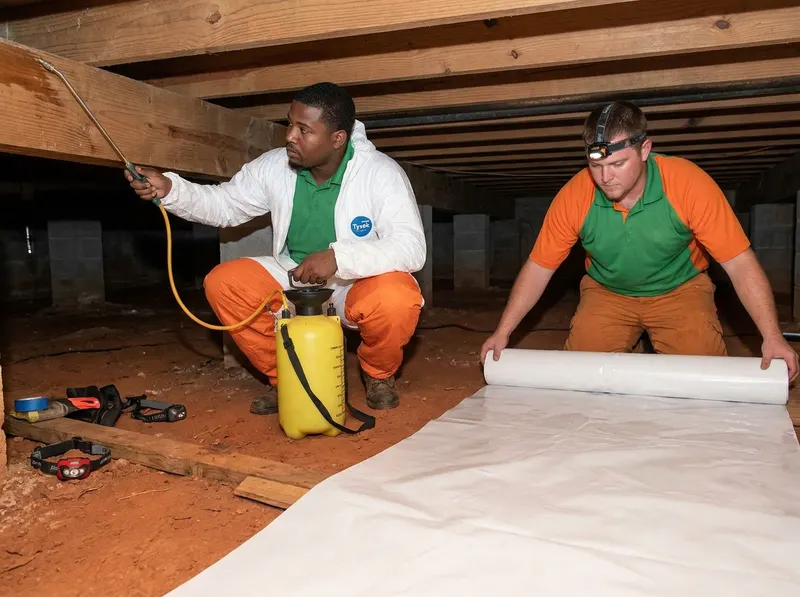
Integrated environmental and chemical timber defense designed to combat structural wood-destroying fungi and subterranean insect invasion in humid foundation basements. Technicians spray heavy saturations of disodium octaborate tetrahydrate (DOT) directly onto exposed subflooring, sills, joists, and floor trusses, delivering an inorganic mineral preservative that permanently protects wood fiber from brown rot, white rot, subterranean termites, and wood-boring powderpost beetles. Following timber sanitization, technicians remove failing structural debris and install a continuous, puncture-resistant 10-mil to 12-mil cross-laminated polyethylene vapor barrier across 100% of the exposed earthen floor, overlapping foundation seams by 12 inches and sealing structural pier columns to lower crawlspace relative humidity beneath the critical 70% threshold that fosters fungal bloom.
Get a quote →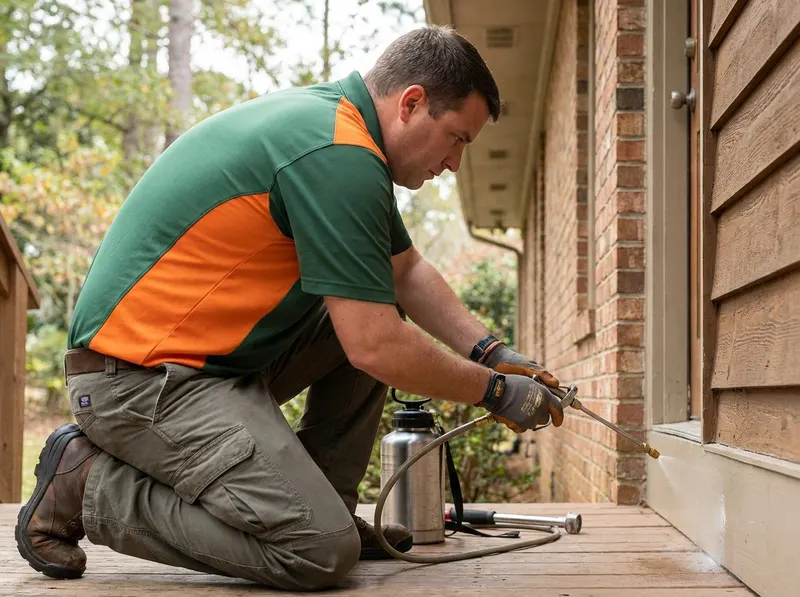
Two-phase indoor carpet, upholstery, and outdoor turf eradication targeting Ctenocephalides felis (cat flea) and Rhipicephalus sanguineus (brown dog tick) infestations. Indoor structural treatments blend broad-spectrum adulticides with long-chain insect growth regulators applied under low-pressure broadcast nozzles directly to low-pile carpeting, baseboard edges, throw rugs, and pet resting zones. This juvenile hormone mimic prevents dropped flea eggs and emerging larvae from developing pupal silk casings, disrupting pupal emergence for up to seven months. Exterior shaded kennel runs, foundation perimeters, and perimeter lawn turf receive residual wettable powder applications to eliminate questing ticks and adult flea populations inhabiting damp pine straw or dense organic mulch borders.
Get a quote →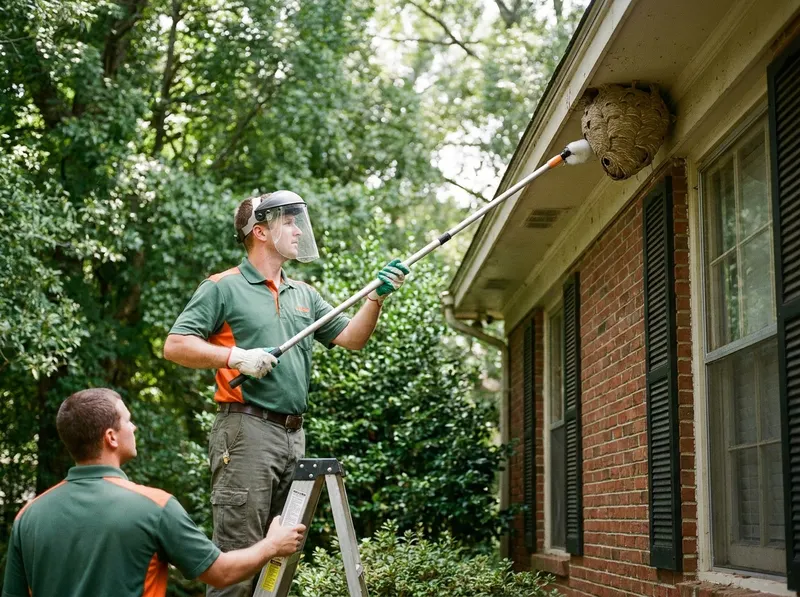
Definitive mechanical elimination and void eradication targeting Dolichovespula maculata (baldfaced hornet), Polistes species (paper wasps), and Vespula squamosa (yellowjackets). Technicians locate structural entry tunnels in masonry weep holes, attic vents, soffit channels, and underground earthen burrows, utilizing pressurized micro-injector dusting tools charged with non-repellent pyrethroid dusts that penetrate deep into paper nests without aggravating aggressive defensive swarms. Once colony paralysis is achieved, technicians perform mechanical removal of aerial paper hives and subterranean nest structures, followed by applying enzymatic surface cleaners to neutralize residual territorial aggregation pheromones that attract wandering reproductive queens back to the same architectural nesting zone.
Get a quote →You get a firm, itemized quote for your pest control service before any work begins, no surprises, no pressure.
Careful prep, tidy work, and a full cleanup when we are done. We treat your home and belongings like our own.
The same trusted, background-checked team from the first call to the final check.
Selecting structural pest defense depends on insect biology, nesting depth, and architectural framing. If an infestation involves localized nuisance invaders like American cockroaches or odorous house ants along baseboards, select exterior perimeter barrier defense; if insects nest inside insulated wall cavities, mattress seams, or subflooring, choose specialized thermal remediation or non-repellent interior void injections. The trade-off centers on upfront preparation labor versus long-term clearance speed: perimeter chemical barriers require minimal indoor furniture shifting but need 10 to 14 days to break reproductive life cycles, whereas total-room thermal remediation demands thorough textile bagging and 6 to 8 hours of structural heat dwell time but achieves immediate single-day egg and adult mortality.
For wood-destroying organisms, localized spot injections fit visible crawlspace timber damage, whereas whole-structure liquid trenching or sub-slab drilling is necessary when subterranean colonies span the exterior foundation perimeter. If moisture levels in crawlspaces exceed 20% wood moisture equivalent, chemical termiticides alone remain vulnerable to dilution and leaching, necessitating a paired closed-crawlspace vapor barrier upgrade to permanently halt structural wood rot and insect colonization. 25-inch hardware mesh ensures secondary colonies repopulate attic insulation within weeks.
When prioritizing low-toxicity protocols for households with respiratory sensitivities, localized dry-vapor steam extraction combined with amorphous silica gel desiccant dust inside wall voids replaces standard pyrethroid broadcasts, trading immediate knockdown velocity for a zero-odor, non-volatile chemical footprint that lasts up to 10 years inside undisturbed cavities.
Every project gets a firm, written price after a free on-site visit. Ranges below for orientation.
Tell us about your pest control service job and we'll send a clear, written quote, usually the same day. Or just call and talk to a real Augusta pro.
(762) 388-0746
Properties throughout Richmond County contend with exceptional biological pest pressure created by the humid ecosystem of the Savannah River basin and the sprawling wetland borders of Phinizy Swamp Nature Park. In historic architectural pockets like Summerville, Old Town, and Harrisburg, elevated wood-frame foundations and historic heart-pine sills built decades ago rest over damp, unsealed crawlspaces, creating ideal conditions for subterranean termites and wood-boring beetles that thrive in crawlspace humidity above 75%. In contrast, modern slab-on-grade developments and ranch homes throughout West Augusta, Forest Hills, and Montclair frequently encounter severe roof rat and squirrel incursions along overhanging loblolly pine canopies, as well as relentless German cockroach infestations exacerbated by seasonal heat. Near the Augusta Canal National Heritage Area and neighborhoods surrounding the Augusta University Summerville Campus, recurring summer downpours regularly overwhelm residential storm swales, creating concentrated breeding pools that fuel rapid surges of floodwater mosquitoes from June through late September.
Free estimates for Augusta & the surrounding area.
 Trivano Pest Assistance